Can you tell us about how you became a painter?
I started painting at ACAD, which was around 2009. I originally went there to get a graphic design degree, but fell in love with using paint and charcoal. I have been pursuing that ever since. My start in visual art was with digital work and photography. My portfolio to get into ACAD was all T-shirt designs, album art etc for my own musical projects and musicians I knew.
What artists are you influenced by?
There’s a few artists here in Calgary that I really like, though I’m not sure how much they or others come through in my work. I try not to think about that too much, so I can do as much of my own thing as possible. The urge to paint is in part influenced by the music I listen to. I’m listening to an artist called Gordi ( https://www.youtube.com/watch?v=oI9s6RPssEo ) right now. It makes me feel hopeful, and celebratory. Painting is an extension of that.
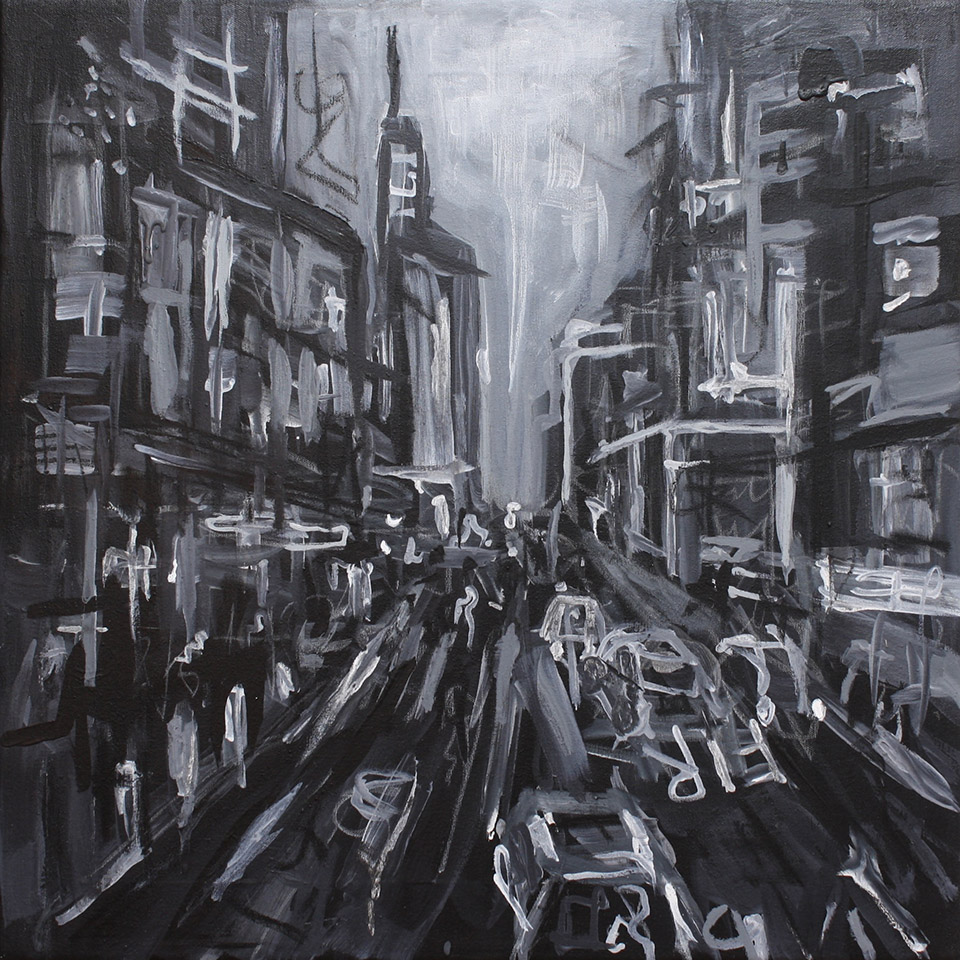
Frantic City $670 for sale
How do you choose your subject matter?
I look for images that are almost overwhelmingly complex. The goal is to use my style to create a cohesion of sorts I’ve been really into cityscapes lately, as they have a great visual energy to them. I like doing portraits too, but it’s not really too important who they are necessarily, it’s more about the emotion or universal character that’s portrayed.
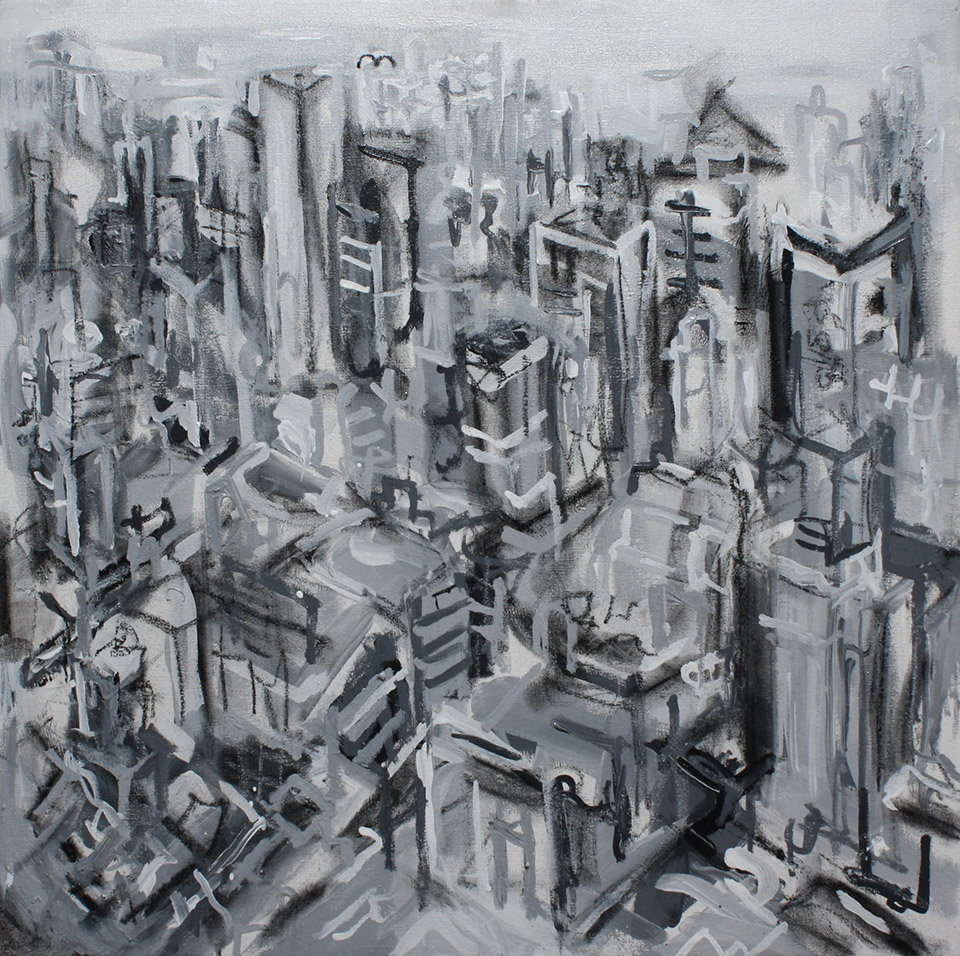
Angled City $670 for sale
How does your personal history work its way into your painting?
That’s a good question. I feel like these cityscapes can serve as metaphors for a messy mind. I am living with a type of schizophrenia, so may be fitting. That being said, I think there’s a lot of art out there where the words the artist attach seem ridiculous. People connect with story and context, which I find hard to attach to the work honestly. There’s an anxiety I have with words, which is wonderfully absent when I paint.
I like to put the #3 in there when I can. There was a point where 3s, triads etc held a mystical significance for me, and it’s a way for me to almost honour that part of myself. There is a conceptual side to my work, which I’m in the early stages of figuring out. That being said, at the moment I feel pretty non-conceptual with my visual work. They really drill that into your head when you’re at art school. There’s so many different ways to talk about art, and I think as the artist you can steer the conversation if you want. Right now, for me I feel it’s sufficient to experience the art without me attaching narrative or verbal ideas. I think that’s partly what the viewer brings to the table, and like to keep the possibilities open.
What is your work process?
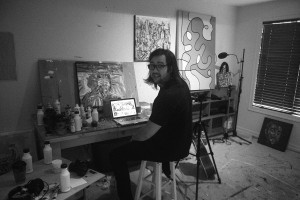
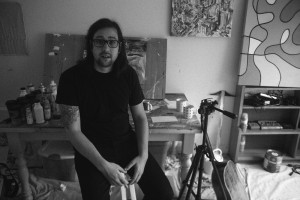
I start with a reference photo, which can take a long time to find as I sift through images until one connects intuitively. I try to mimic the reference, and fail to do so, which I think is where the art comes to be. There’s a point when I disregard the reference, and make marks based on what I think works best aesthetically. Sometimes I will bring the work into Photoshop and make subtle changes there to see if I want to do them on the actual painting. I work relatively fast, but like gaps of time in between sessions to gain fresh perspective.
If you could have one piece of art, what would it be?
John’s Music: http://francischeer.com
John’s Artwork: http://www.jfgerrard.com